Crash Barriers · 2026-04-28
Choosing the Right Crash Barrier for Your Highway Project
By Hitesh Lunnia · Director · 1 min read
Step 1 — Traffic analysis: identify design speed, AADT, heavy vehicle percentage, two-wheeler share. Higher heavy-vehicle and higher-speed conditions push you toward Thrie Beam or Concrete.
Step 2 — Alignment review: sharp curves, bridge approaches and steep gradients require higher containment classes regardless of average traffic.
Step 3 — Hazard assessment: identify roadside hazards (fall heights, oncoming traffic in undivided sections, rigid roadside structures, occupied buildings, water bodies). Severe hazards justify higher containment and higher capital investment in barriers.
Step 4 — Deflection space: how much working width is available behind the barrier? Flexible W Beam needs more deflection space; Concrete needs almost none.
Step 5 — Maintenance philosophy: who repairs barriers after hits? Where access is difficult, choose lower-maintenance options like Concrete.
Step 6 — Documentation and tender compliance: confirm the chosen system has approved sub-vendors, available test data and a track record on similar projects.
Auroguard's project team supports this decision process at no cost. Send your project drawings or BOQ and we will recommend the barrier mix that balances safety and budget.
Related Products
Products referenced in this guide
AG-9462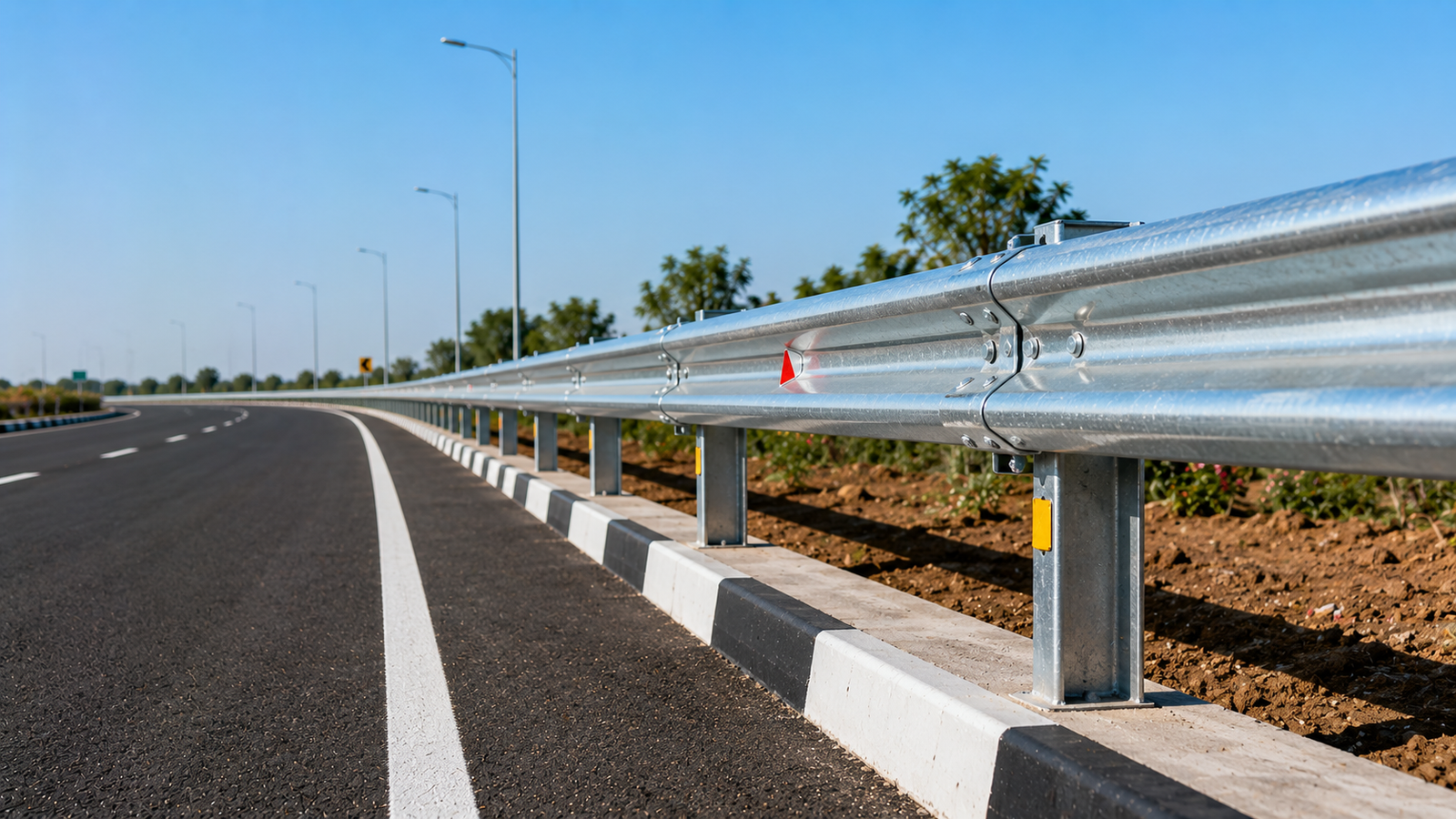
Road Safety & Highway Barriers
Guard Rail
Hot-dip galvanized steel W-beam safety guard rails engineered to MORT&H and IS:2062 specifications for roadside edge protection, embankment safety, and low-to-medium impact containment.
View productAG-5045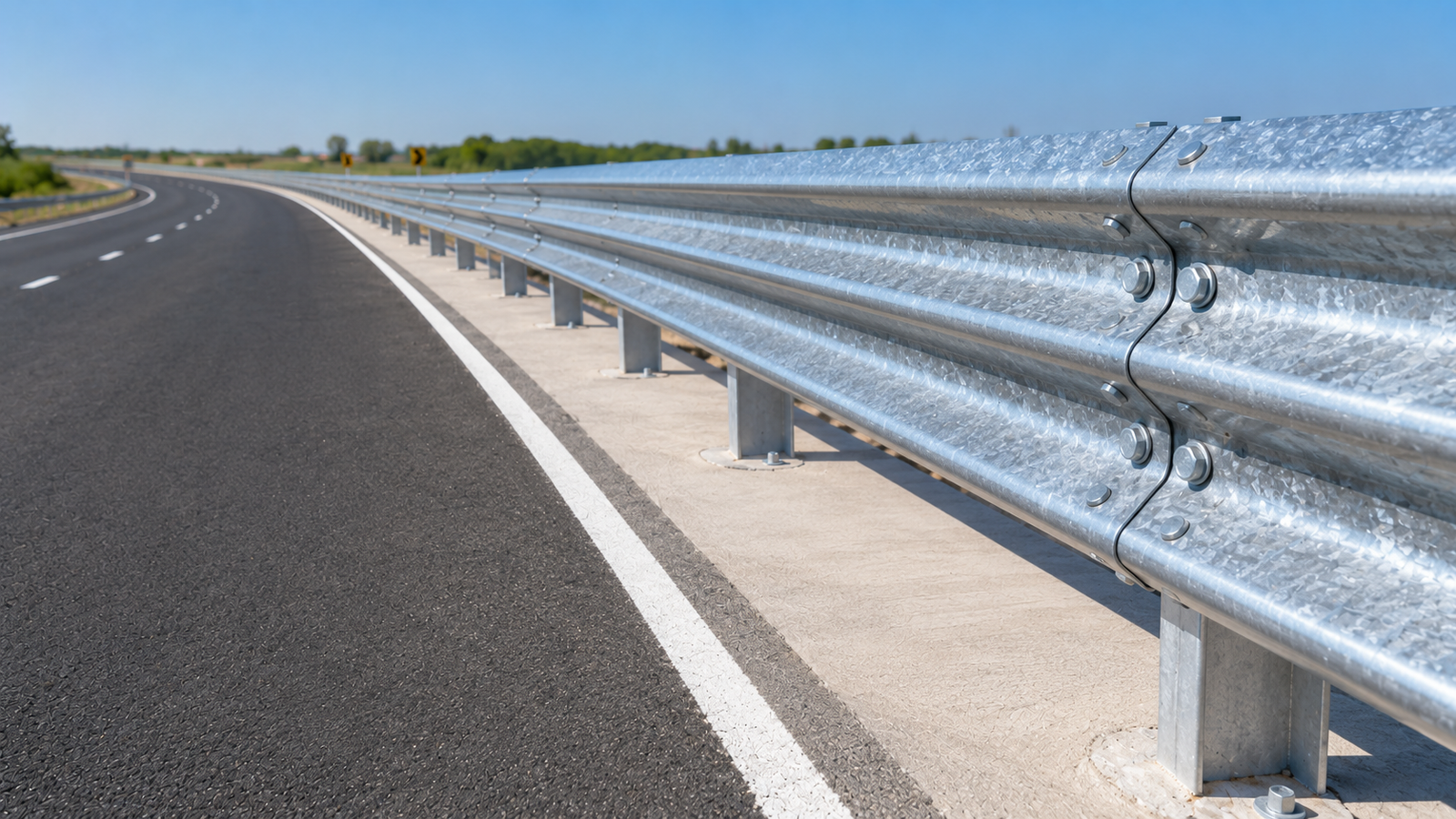
Road Safety & Highway Barriers
Highway Crash Barrier
High-containment hot-dip galvanized steel Thrie-beam and W-beam systems engineered to EN 1317 specifications for high-speed expressways, flyovers, and central median splitters.
View productAG-2751
Road Safety & Highway Barriers
Metal Beam Crash Barrier
Industrial-grade cold-rolled hot-dip galvanized steel corrugated beam panels and structural components supplied for institutional infrastructure and B2B road safety projects.
View productAG-8360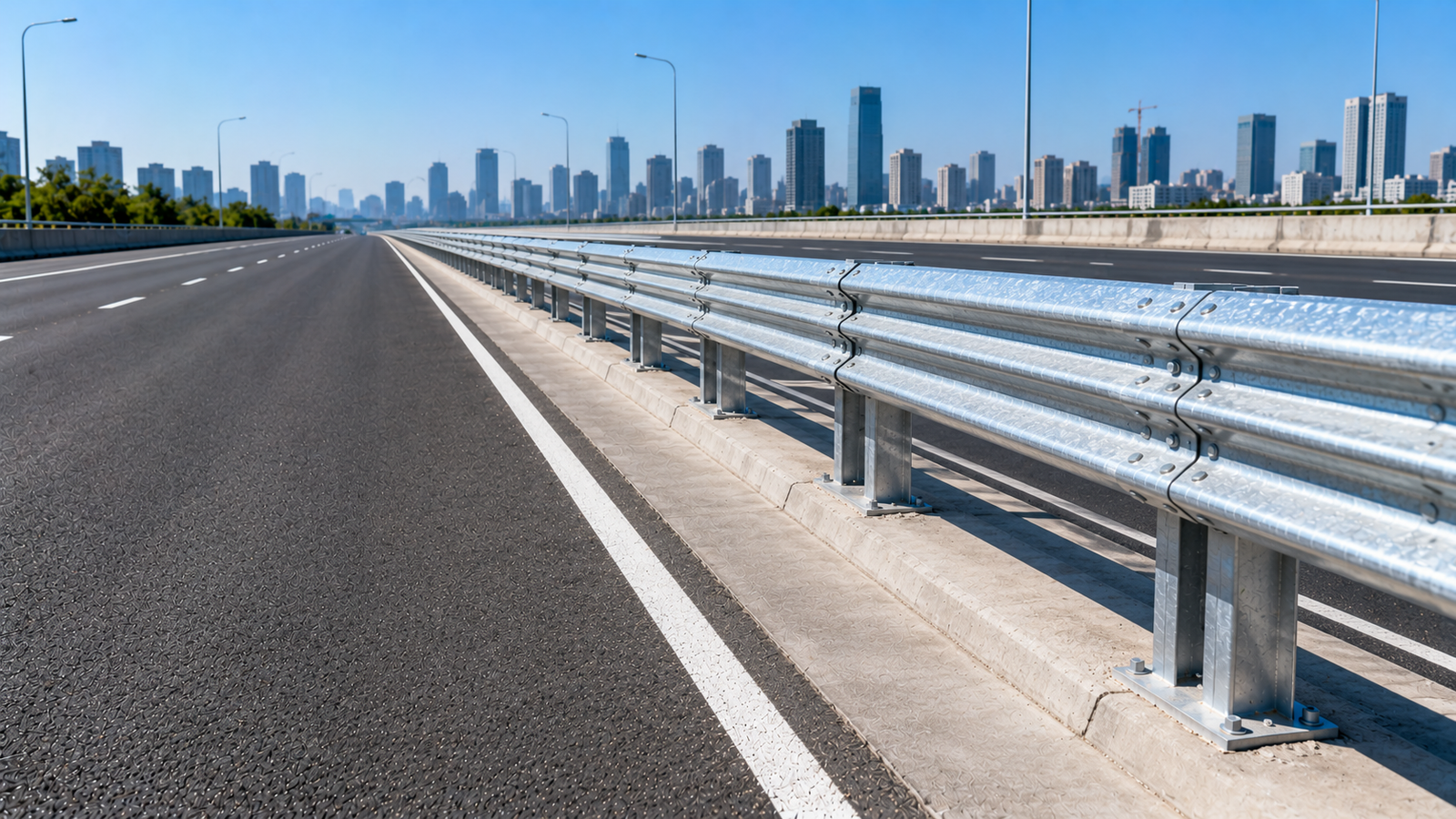
Road Safety & Highway Barriers
Thrie Beam Crash Barrier
High-containment hot-dip galvanized steel triple-corrugation safety barriers engineered to MORT&H and EN 1317 specifications for heavy vehicle containment, high-speed expressways, and high-risk impact zones.
View productAG-3515
Road Safety & Highway Barriers
W Beam Crash Barrier
Standard-containment hot-dip galvanized steel dual-corrugation safety barriers engineered to MORT&H and IS:2062 specifications for highway edge lines, sharp curves, and baseline vehicular containment.
View product
About the author
Hitesh Lunnia
Director at Auroguard Private Limited. Auroguard manufactures highway crash barriers, guardrails and geosynthetics to IRC, MoRTH and IS specifications, supplying NHAI, PWD and EPC infrastructure projects across India. This guidance reflects direct manufacturing and project-supply experience — not third-party rewriting.
Need this for a live project?
Talk to the Auroguard desk for specifications, documentation and dispatch.